Forensic EngineeringWeather Damage Cause of Loss Investigation

Weather-related claims are among the most common and most frequently disputed losses insurance carriers handle. The issue is rarely whether a storm occurred; it is whether the claimed damage was actually caused by that storm, or instead resulted from ordinary wear, deferred maintenance, or a prior, unrelated event. That distinction determines whether a claim is paid, denied, or sent to appraisal.
Vision Forensic Engineering conducts independent weather damage investigations nationwide, correlating documented property conditions with verified meteorological data to develop objective, evidence-based cause of loss opinions. Whether our findings support or contradict the claimed cause of loss, our conclusions are driven by the physical evidence.
Perils & Structural Failure Modes Analyzed
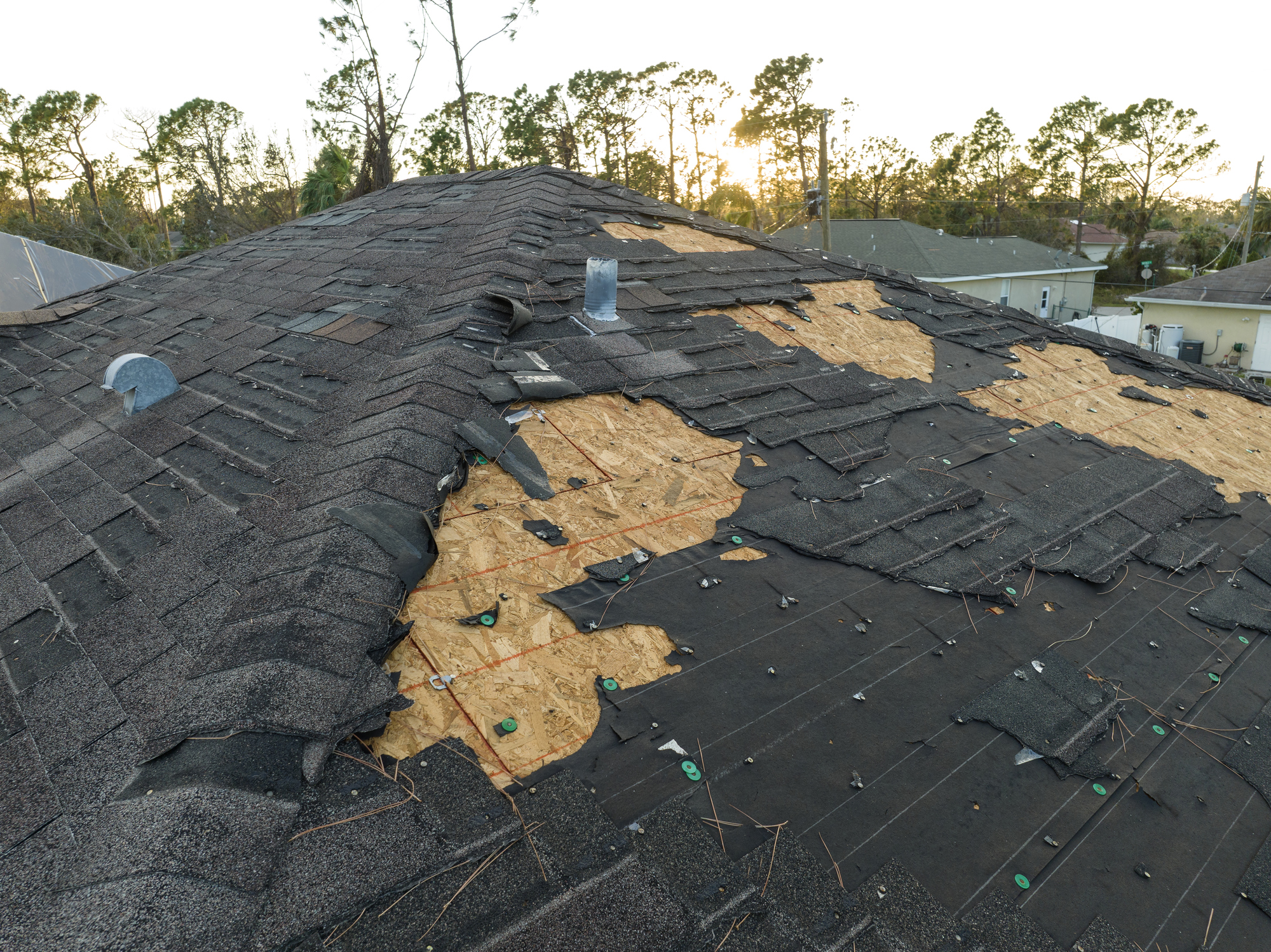
- Wind damage: Structural failure, siding and cladding loss, and roof covering displacement caused by sustained wind or gusts. Wind damage patterns are often directional and may concentrate at edges, corners, and ridgelines where uplift forces are greatest. These are characteristics that help distinguish sudden wind damage from age-related deterioration.
- Hail damage: Impact damage to roofing materials, HVAC condenser fins, siding, gutters, and painted metal surfaces. Hail investigations typically involve test squares, granule-loss assessment on asphalt shingles, and evaluation of whether the impact is functional or cosmetic. This is an important distinction because not all hail impacts result in functional damage or reduce a roof's remaining service life.
- Hurricane and tropical storm damage: These investigations often require evaluating multiple interacting failure mechanisms on a single property, including wind uplift, wind-driven rain intrusion, debris impacts, and, where applicable, storm surge.
- Freeze and ice damage: Pipe bursts from freeze events, ice dam formation with associated water intrusion, and freeze-thaw-related material failures.
- Flood investigations: Water entry connected to rising water or a specific flood event, which must be carefully distinguished from plumbing failures, grading issues, or long-term envelope deficiencies.
- Wind-driven rain investigations: Water intrusion associated with wind-driven rain during a storm event, evaluated separately from flood mechanisms since the engineering questions involved are often distinct.
How We Determine Weather-Related Cause of Loss
Weather damage investigations require a different evidentiary approach than other cause of loss work, because the question is not only what is damaged, but whether the damage correlates with a documented weather event at that location on that date. Our approach follows four steps:
- Site inspection and damage mapping. We document damage location, pattern, severity, and material condition in detail: directionality for wind, impact spacing and size for hail, and water entry points for storm-driven intrusion.
- Weather data correlation. Field findings are cross-referenced against meteorological data, including NOAA storm reports, verified hail-swath data, and wind speed estimates, for the claimed date and location to confirm that a qualifying weather event occurred at the property. This correlation helps establish not only whether a weather event occurred, but whether it was capable of producing the observed damage.
- Differentiation from pre-existing conditions. We assess material age, prior repair history, and wear patterns to determine whether damage attributed to a storm is instead consistent with age-related deterioration, deferred maintenance, manufacturing defects, or previous repairs that predate the event.
- Functional damage analysis. Particularly for hail claims, we distinguish cosmetic marking from damage that actually compromises a material’s function or remaining service life, a distinction that has significant coverage implications and is often the central point of dispute.
Meteorological data alone cannot determine the cause of property damage. Weather records establish what environmental conditions occurred, but only a field investigation can determine whether those conditions produced the observed damage. Our opinions combine both lines of evidence—verified weather data and documented engineering observations—to develop a complete cause of loss analysis.
Do You Need an Independent Weather Damage Investigation?
Whether you're adjusting a claim, evaluating disputed storm damage, or preparing for appraisal or litigation, Vision Forensic Engineering provides objective, evidence-based weather investigations.